Environmental risk management: a strategic imperative for modern enterprises
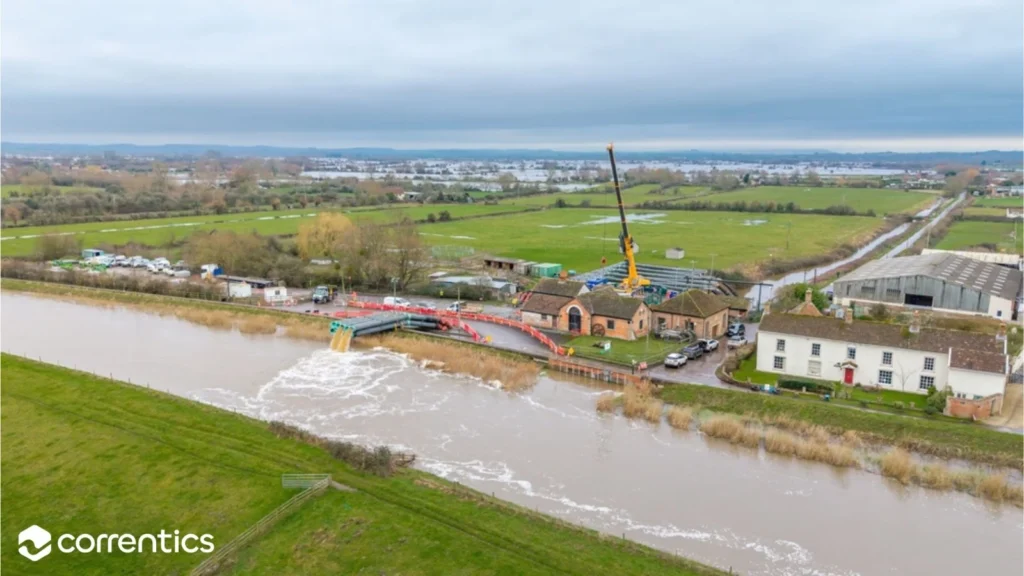
A manufacturing firm based in Rotterdam learns of flooding at the warehouse of its main supplier in Valencia, resulting in a three-week disruption. Although the flooding could not have been prevented, the lack of a contingency plan amplified the impacts on production.
Such instances are becoming the norm in today’s world, where estimated economic losses from natural disasters amounted to $220 billion in 2025, 92 percent of which were wildfires, storms, and floods. Environmental risks are no longer marginal issues. They are crucial risks that must be managed systematically.
This article provides details on environmental risk management, the framework and assessments associated with such management, and explains why environmental risk management has become a board-level issue within European and American corporations.
Environmental risk management definition
Environmental risk management can be defined as the identification, assessment, and mitigation of risks posed by environmental hazards and regulatory shifts before they manifest as losses. Hazards include floods, wildfires, droughts, pollution incidents, and regulatory shifts.
Environmental risk management is an approach that straddles the fields of physical climate risks and regulatory or reputational risks. A flood is not only a danger to the physical assets of a company, but it can also severely contaminate the environment with potentially poisonous substances used in production. In addition, exposure to flooding requires a company to make disclosures and manage environmental, legal, and reputational risks in case of post-event contamination. Environmental risk management emerged because these aspects became linked.
Most of the theory behind environmental risk management has emerged from well-established paradigms, such as those put forward by the EPA regarding ecological and cumulative risk assessments. The paradigms have been the bedrock of our understanding of hazards, exposures, and consequences.
Environmental risk factors
Several risk factor categories should be considered when assessing the environment.
- Acute physical risks refer to floods, forest fires, hurricanes, heatwaves, and droughts, all of which affect physical facilities, agricultural inputs, and infrastructure.
- Chronic physical risks are associated with rising sea levels, altered rainfall, and higher temperatures. Such risks occur slowly but may significantly change the regional business environment.
- Regulatory and transition risks include carbon pricing systems, emissions regulations, and new compliance requirements.
- Supply chain risks arise from the activities of suppliers and business partners, even if an organization’s own facilities are not affected.
- Reputation and stakeholder risks are related to the demands of investors, regulators, and consumers for transparency of environmental risks.

Types of environmental risk assessment
Risk management usually entails using various environmental risk assessment methods rather than just one.
- Qualitative risk assessment involves the use of expert knowledge, scenario workshops, and stakeholder views. It is efficient for preliminary risk screening but lacks precision.
- Quantitative risk assessment uses probability models, economic impact assessments, and hazard-level data. This method is especially useful for evaluating risk across a broad geographical area.
- Ecological risk assessment evaluates the impacts of environmental stressors on ecosystems. The method is especially useful for companies exposed to land use, agriculture, or biodiversity exposure.
- Human risk assessment focuses on evaluating the effects of risk exposure pathways on company employees and neighboring communities, such as poor air quality and contamination.
- Cumulative risk assessment involves using a multi-risk impact assessment according to the EPA’s methodology. While the company can survive a single flood, it cannot survive a flood combined with a heat wave and lack of supply in the same financial year.
Advanced companies usually combine several risk assessment methods to come to a conclusion.
Developing an environmental risk management plan
An environmental risk management plan generally consists of five elements.
- The hazard identification process includes identifying risk factors pertinent to a company’s operational environment.
- The exposure and vulnerability assessment determines which assets, employees, and nodes in the supply chain pose the highest risk.
- Risk prioritization ensures that risks are prioritized and resources are allocated efficiently, given the impracticality of managing all risks at once.
- The mitigation and response strategy outlines the steps to follow before, during, and after an environmental incident.
- Monitoring and review keep the plan up to date, since static evaluations quickly become irrelevant as climate information changes.
This framework is consistent with the plan-do-check-act approach, which is the basis of ISO 14001, the international standard for environmental management systems. Although ISO 14001 is not a climate risk tool, the principle of continual improvement makes the process applicable to environmental risk management planning. Furthermore, ISO 14092 helps organizations move from risk awareness to coordinated and measurable climate adaptation by providing a methodology for assessing climate risks and by prioritizing and tracking actions.

Environmental risk management strategies
There are various techniques that help enhance organizational resilience.
- Geographical diversification of the supply chain helps reduce reliance on a single area that might be affected by environmental conditions.
- Redundancy in critical infrastructure and logistics networks reduces the impact of a localized event on an organization’s operations.
- The integration of environmental risk management into capital planning ensures that all future facilities and investments take hazard exposure into account.
- Scenario planning for different climate scenarios is one way to prepare for a range of possibilities rather than just the predicted one.
Environmental risk management strategies, in conjunction with disclosure requirements, are becoming increasingly crucial. As part of the CSRD, companies operating in the EU must conduct a double materiality assessment, which involves assessing not only the financial impact of environmental risks on the organization but also the organization’s impact on the environment.
Corporate environmental risk management as a governance priority
In today’s context, corporate environmental risk management is no longer limited to sustainability teams but has become part of governance and financial planning practices.
This trend is driven by three factors. The first is regulatory requirements, such as the CSRD and the ESRS reporting framework in Europe, which require systematic reporting. The second trend is financial: more insurers are using climate exposure information to determine insurance premiums, requiring more detailed risk reporting to secure coverage. Finally, the third trend is that stakeholders demand clarity in information rather than just promises.
Well-managed companies will be able to provide specific answers to specific questions regarding flood exposure for certain plants over the next decade, suppliers operating in areas susceptible to wildfires, and the financial impact of warming scenarios. Such questions will require accurate information infrastructures and not just policies.
The role of environmental risk management software
There is a growing need for environmental risk management software, as manual approaches are inadequate for companies managing environmental risks across their facilities and suppliers’ locations. The growth in the size of the organization results in an increase in the number of hazards, regulatory issues, and supplier dependency that is impossible to manage using spreadsheets and other traditional tools. It is impossible to manually collect and model climate hazard data while simultaneously observing how hazards evolve across different locations and meeting disclosure requirements. To address the problem, environmental risk management software is needed.
First of all, the problem is not only the number of hazards. It is a question of time. Quarterly spreadsheet updates cannot account for a wildfire spreading in the supplier’s location or a storm system approaching the company’s facility. By the time data is collected manually, exposure will transform into losses. Software designed specifically for managing and monitoring environmental risk closes this gap and automatically collects hazard data, turning it into a live view of the organization’s exposure across all its facilities.
One of the firms working in this area is Correntics. Instead of using a static risk register, Correntics relies on climate risk analytics and data-driven modeling to identify exposures and take action before the situation results in losses. Correntics identifies physical and transition risks, models supply chain exposures down to individual supplier locations, and provides automated climate and sustainability reports, including TCFD-aligned disclosures. This is why this kind of software is important: it saves resources that would otherwise be spent on preparing disclosures.
Having real-time access to hazard data changes how teams work considerably. Instead of reviewing risk periodically, procurement, operations, and compliance teams can identify emerging hazards and understand their company’s exposure to them before anything happens. Environmental risk management is a continuous process involved in everyday decision-making.
Exactly this is what the whole field is about. Not forecasting the future with certainty but identifying the exposures and acting upon them.
Environmental risk management examples
Some practical environmental risk management examples will help you understand how these concepts are applied in practice.
For example, a food producer in Europe can map the locations of its suppliers to predict potential drought and precipitation issues and switch suppliers before shortages threaten the production process. It is an example of a quantitative approach to environmental risk assessment, in which hazard data are analyzed against supply chain dependencies.
Logistics companies can analyze flood risks for warehouses and move their high-value goods out of areas with a history of flooding and a higher probability of future flooding. In combination with transport route redundancy, it ensures that there will be no disruption of the whole area due to a natural disaster, which is one of the key concepts of good environmental risk management.
If a manufacturer has several production facilities, it can conduct a cumulative environmental risk assessment to determine whether its designated secondary facilities have the same level of exposure to environmental risks as the main production facilities. Sometimes two facilities expected to serve as secondary facilities share the same risk corridor and thus offer far fewer chances of survival in a disaster than expected.
When a retailer sources raw materials from coastal areas, it can use real-time hazard data to track hurricane and storm surge activity and make corresponding purchases under contingency sourcing agreements before a storm makes landfall, not after.
An energy company or any other utility operating across multiple jurisdictions can integrate weather and climate information that affect the performance of assets, including, e.g., emissions, which need to be incorporated into its environmental risk management process to avoid compliance issues and more accurately forecast finances, since transition risk becomes quantifiable in that case.
The main aspect that all of these examples have in common is the need to take decisions based on structured data and regular risk assessments well before a crisis occurs. This is exactly the difference between companies with effective environmental risk management and those that discover their environmental exposure too late.

Conclusion
Environmental risk is no longer an occasional line item buried in an annual sustainability report. It is a recurring operational and financial factor that shapes operational performance, supply chain continuity, capital allocation, insurance costs, and regulatory standing every quarter. Companies that continue to treat it as an intermittent concern, addressed only after an event forces the issue, are already operating at a structural disadvantage.
The organizations best positioned to withstand this volatility are those that manage environmental risk with the same discipline applied to financial risk: clear ownership, defined frameworks, and decisions grounded in verifiable data rather than assumptions or historical precedent alone. As physical hazards intensify and disclosure requirements such as the CSRD become more demanding, this level of rigor is fast becoming a baseline expectation rather than a differentiator. The gap between companies with a functioning environmental risk management framework and those without one will only widen as environmental volatility increases.
Correntics helps businesses make this shift, equipping them with the analytics, hazard modeling, and disclosure infrastructure needed to move from reactive response to genuine foresight. The result is not certainty about the future, but the ability to see exposure building early enough to act on it, protecting continuity, compliance, and insurability along the way. To explore how this approach applies to your organization’s value chain, schedule a demo with Correntics.
FAQs about environmental risk management
What is environmental risk management?
Environmental risk management is the practice of identifying, assessing, and addressing environmental risk factors, such as floods, wildfires, and regulatory shifts, before they cause operational or financial harm. It typically involves a structured environmental risk management framework and plan to guide decision-making.
How to measure climate risk?
Climate risk is measured using environmental risk assessment methods such as quantitative modeling, probability-based hazard analysis, and cumulative risk assessment across facilities and supply chains. Environmental risk management software makes this measurement scalable by combining real-time hazard data with financial exposure modeling.
How to calculate environmental risk?
Calculating environmental risk generally involves combining the likelihood of a hazard with its potential financial and operational impacts, drawing on both qualitative and quantitative environmental risk assessment methods. Corporate environmental risk management programs often standardize this calculation across facilities to enable consistent prioritization.
How to manage environmental risk?
Managing environmental risk requires a documented environmental risk management plan covering hazard identification, exposure analysis, prioritization, and response protocols. Effective environmental risk management strategies, such as supply chain diversification and environmental risk mitigation built into capital planning, turn that plan into practical resilience.
What are the benefits of environmental risk management?
Strong environmental risk management reduces business interruption, improves insurability, and strengthens compliance with disclosure requirements such as the CSRD. As the environmental risk management examples above show, it also protects reputation and gives stakeholders confidence in how a company anticipates and mitigates emerging risks.