Understanding Physical Climate Risk: Definition, Assessment, and Impact
The effects of climate change become increasingly evident each year, with new temperature records being exceeded, as seen in 2023 or 2024 , and a fivefold increase in extreme weather events between 2010 and 2019 compared to 50 years ago. As these events become more frequent and their economic impacts grow, understanding physical climate risks and their impact on business operations is imperative.
The impacts of climate change have been moving faster than anticipated earlier. According to the World Meteorological Organization, 2024 was the warmest year on record, with global temperatures about 1.55°C above pre-industrial levels. Despite 2025 being the third-warmest year since the beginning of global temperature records, with temperatures exceeding 1.5°C above pre-industrial levels, 2023–2025 became the first period in which the three-year average temperature exceeded 1.5°C, as reported by Copernicus.
On the other hand, climate-related events have risen fivefold between 2010 and 2019 compared with 50 years ago, according to the WMO. With such incidents becoming increasingly common and their economic consequences more severe, it has become imperative for businesses to understand the physical risks of climate change.
This article provides a comprehensive overview of physical climate risk, covering clear physical climate risk definition and real-world physical climate risk examples to illustrate its significance. Learn how physical climate risk assessment and physical climate risk analysis are conducted, understand the difference between physical and transition climate risk, and explore the principles behind physical climate risk modeling.
Physical Climate Risk Definition
In the context of weather and climate change physical risks, the Intergovernmental Panel on Climate Change (IPCC) provides the following general definition for risks: Risk is the potential for adverse consequences.
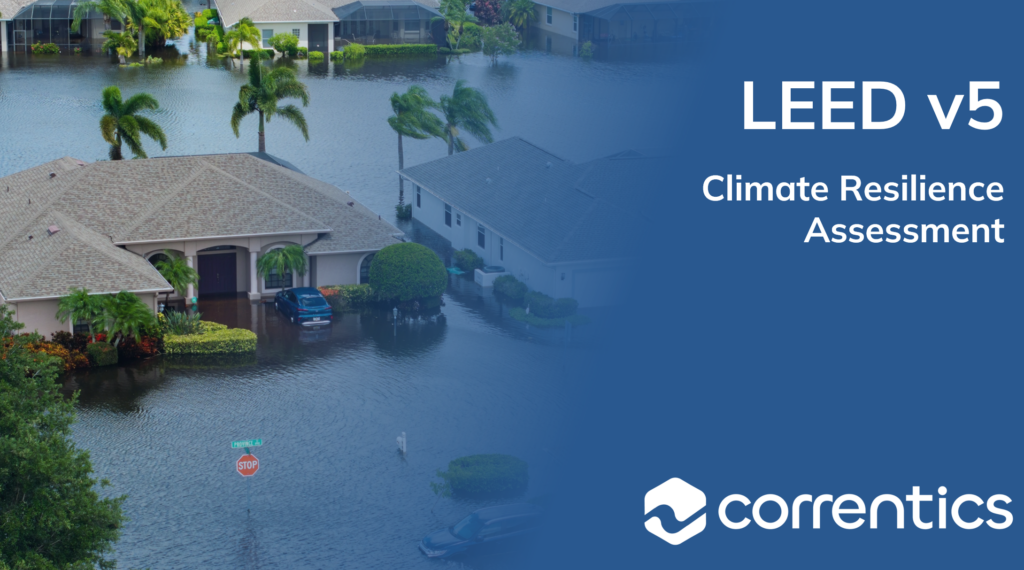
According to the recommendations of the Task Force on Climate-related Financial Disclosures, physical climate risks are defined as risks arising from the impacts of climate change and are categorized into two types: acute and chronic. Acute physical climate risks are event-driven and include the increased severity of extreme weather events, such as cyclones, droughts, wildfires, extreme precipitation, or floods. In contrast, chronic physical risks involve longer-term shifts in climate patterns, such as rising temperatures, which can lead to issues like sea-level rise, persistent heat stress, and changes in precipitation patterns.
It should be noted that the role of overseeing firms’ climate-related disclosures has been entrusted to the IFRS Foundation since 2024, a task that had previously been assigned to the TCFD. The IFRS S2 Climate-related Disclosures requirement of the ISSB, which became effective for periods starting from 1 January 2024 onwards, provides the basis of global climate disclosure guidelines and is an extension of the TCFD framework of four pillars. There is no need for organizations making this shift to use both frameworks simultaneously.
Example of acute physical climate risk
Example of chronic physical climate risk


What are the Physical Risks of Climate Change?
Physical risks of climate change can lead to financial impacts for organizations, including both direct damage to their assets and indirect consequences from disruptions in the supply chain. A CDP study reveals that businesses expect potential losses from physical climate change threats of around $162 billion, which is three times the estimated cost to mitigate them, at $56 billion. However, only 25% of businesses integrate these risks into their risk management practices.
Examples of potential financial impacts of physical risks of climate change listed by TCFD:
- Decreased revenue from reduced production capacity due to transport issues or supply chain disruptions.
- Higher capital expenses due to facility damage and repairs.
- Lower revenue and higher costs resulting from workforce impacts, such as health issues and safety concerns.
- Increased operating expenses, due to inadequate water supply for hydroelectric or cooling systems or increased cooling demand due to higher temperatures.
- Reduced production due to the necessary abandonment of production sites in high-risk areas due to damage.
- Increased insurance premiums and potential challenges in securing coverage for assets in high-risk areas. In some regions, private insurance is already becoming unavailable or unaffordable for climate-exposed properties.
Climate change physical risk and its implications
Physical climate risks can significantly impact various sectors in diverse ways, impacting operational efficiency, financial performance, strategic planning, and overall resilience.
- Agriculture and Food: In agriculture, physical climate risks such as extreme weather events and shifting climate patterns can disrupt crop yields and food production. For instance, prolonged droughts can severely reduce water availability, impacting irrigation and lowering crop outputs. This can lead to increased food prices and supply shortages. Additionally, changing weather patterns may introduce new pests and diseases, further challenging food security and farming practices.
- Power and Energy: The power and energy sector faces physical climate risks through increased temperatures and extreme weather events that affect infrastructure and operations. For example, higher temperatures can reduce the efficiency of power plants, especially those relying on water for cooling, such as hydroelectric and nuclear plants. Increased frequency of extreme weather events, like hurricanes or floods, can damage critical infrastructure, leading to costly repairs and operational downtime.
- Manufacturing: In manufacturing, physical climate risks can cause production delays and increased costs due to extreme weather events and shifting climate conditions. For example, flooding can damage manufacturing facilities and machinery, leading to expensive repairs and halted production. Extreme temperatures can further impact the quality of materials and products, necessitating adjustments in production processes and facilities.
- Chemical manufacturing: The chemical industry faces risks from physical climate impacts affecting raw material availability and production processes. For instance, severe weather events or changes in water availability can disrupt the supply of essential raw materials or chemicals needed for production. It can lead to increased costs and potential production delays. Extreme temperatures can affect the stability and safety of chemical products, requiring enhanced safety measures and infrastructure adaptations.
- Retail: Retailers are mainly impacted by physical climate risks through disruptions in supply chains. Extreme weather events can delay shipments and damage inventory, leading to stockouts and revenue losses.
- Logistics and Transport: The logistics and transport sector is particularly vulnerable to physical climate risks, as extreme weather events can disrupt transportation networks and supply chains. For instance, hurricanes, floods, or heavy snow can lead to road closures, delays, and increased fuel costs.
Overall, physical climate risks have far-reaching implications across different sectors, impacting operational efficiency, financial performance, and strategic planning. Adapting to these risks involves understanding their specific impacts and implementing resilient practices to mitigate potential disruptions.
Managing and adapting to physical climate risk
Identifying physical climate risks through a physical climate risk assessment methodology (PCRAM) is just the first stage of an organization’s climate risk management journey. To reduce exposure to climate risks, enhance resilience and secure business performance in the face of climate hazards, companies should develop a comprehensive strategy for physical climate risk management and adaptation.
Organizations that take a leadership role when managing physical climate risks generally act along four complementary strategies:
1. Adaptation of assets and infrastructure through physical means
Physical adaptation involves altering assets to protect them from climate-related risks identified through the physical risk assessment process. This may involve building flood defenses or raising critical machinery in areas prone to floods, strengthening roof structures to resist high winds, improving water retention and draining systems to cope with droughts and excess rainfall, and renovating structures to counteract the impact of rising temperatures. According to a World Resources Institute study that examined 320 projects, one dollar spent on climate adaptation yields more than ten dollars in benefits, making it quite lucrative for companies aware of climate change.
2. Supply chain resilience
The supply chain is considered one of the areas most prone to physical climate risks. In July 2024, for instance, a Switzerland-based aluminum alloy provider was affected by floods, forcing a carmaker in Germany to lower its expectations; analysts have forecast that production will be negatively affected, with estimates ranging from 10,000 to 17,400 cars missing their targets. After assessing physical risk, some standard practices include supplier mapping using hazard maps and maintaining buffer inventories.
3. Financial risk transfer
Using insurance, parametric products, and other financial tools can help organizations manage some portion of their acute physical climate risk exposure by transferring it to the market. Unfortunately, rising premiums and insurers’ increasing reluctance to cover high-risk geographies make risk transfer insufficient in many instances. Indeed, in some US coastal areas and regions prone to wildfires, property insurance is no longer available or is too costly, making physical adaptation or relocating operations a necessity.
4. Strategic asset and location decisions
Physical climate risk modeling under 2030, 2050, and 2100 climate scenarios helps organizations make investment decisions and divest when future risk exposure proves too high. Companies that incorporate physical risk models into their investment appraisal processes benefit by avoiding investments in stranded assets and locating themselves in areas vulnerable to climate hazards.
Correntics helps organizations transform the results of their physical climate risk assessments into prioritized adaptation programs, determining which assets are most at risk and where investing in adaptation will deliver the most value.
Physical Climate Risk Assessment
When conducting a physical climate risk assessment, it is crucial to follow a systematic approach that aligns with reporting regulations. Mostly, it involves the standards set by IFRS S2 (ISSB) and the CSRD (Corporate Sustainability Reporting Directive), which not only mandate that organizations identify physical climate risk but also require them to quantify its potential economic impact.
The former, which came into effect on January 1, 2024, and is being implemented across 36 jurisdictions, requires firms to disclose material physical climate risks across four pillars – Governance, Strategy, Risk Management, and Metrics and Targets. Similarly, the latter, to be implemented for larger firms in the EU region beginning in 2024, requires the same disclosures to be made in accordance with the European Sustainability Reporting Standards (ESRS).
The process of physical climate risk analysis involves evaluating the potential impact of climate-related hazards on assets, operations, and overall business activities. In general, a physical climate risk assessment begins with identifying the relevant climate hazards for each location within a portfolio. These hazards might include extreme weather events such as floods, hurricanes, or heatwaves, as well as long-term climate changes like rising sea levels or shifting precipitation patterns.
Once the relevant hazards are identified, the next step in the physical climate risk assessment involves combining the exposure of a portfolio’s locations with physical hazard data. Given the inherent uncertainty in climate projections, robust physical climate risk analysis draws on a range of climate models and emissions scenarios, typically aligned with the Shared Socioeconomic Pathways (SSPs) used in the IPCC’s Sixth Assessment Report (AR6).
Climate risk analytics software at Correntics facilitates this process by evaluating the severity and frequency of these hazards under current conditions and providing future projections at different levels of extreme-event probability. The physical CSRD climate risk reporting done through this process enables comprehensive mapping of potential physical risks and assessment of the vulnerability of assets and infrastructure to the identified hazards.
Physical climate risk and financial disclosure: what organisations need to know in 2026
No other regulatory regime for disclosing climate physical risk has seen such extensive revision and overhaul during the past couple of years as the present regime. For multinational organizations, the question of what frameworks apply and the specific requirements for each has become a core compliance and governance task.
IFRS S2:The global baseline
With its effective date for reporting periods beginning on or after 1 January 2024, the IFRS S2 standard, issued by the International Sustainability Standards Board (ISSB), represents the new global baseline for climate physical risk disclosures. While based on the TCFD’s four pillars — Governance, Strategy, Risk Management, and Metrics and Targets — IFRS S2 goes a step further than its predecessor by requiring companies to report the anticipated financial effects of material physical climate risks, not only the identification of these risks.
By 2026, IFRS S2 has already been adopted or adopted in draft form in 36 jurisdictions, including Australia (mandatory starting from January 2025), Brazil, Singapore, Hong Kong, and the United Kingdom (for listed companies starting from January 2026). On 9 October 2023, the TCFD was discontinued, and monitoring responsibility was transferred to the IFRS Foundation, implying that organizations required under the TCFD to make disclosures shall begin making those required under IFRS S2, which incorporates the TCFD recommendations.
CSRD and ESRS E1: The European mandatory framework
The Corporate Sustainability Reporting Directive (CSRD), along with its climate standard, the ESRS E1, sets out mandatory physical risk disclosures for organizations with activities in and/or transactions with the European Union. The CSRD applies to over 50,000 companies worldwide (also those that are not EU-based but have significant revenues from EU customers) and requires disclosure under the concept of double materiality: both the impact of the physical climate risk on the company itself (financial materiality) and the impact of the company’s operations on the climate (impact materiality). Under the CSRD, mandatory disclosure will begin for most organizations in 2026 based on the 2025 year-end information. As a result, currently is the moment in time when physical risk assessments required for proper disclosures must be completed.
Other jurisdictions
In addition to the regimes discussed above, physical climate risk disclosure obligations are also mandatory in many other countries. In particular, under California’s SB 261, companies with annual revenue exceeding $500 million that do business in California must disclose climate-related financial risks in line with the TCFD or an equivalent framework, with IFRS S2 considered an accepted equivalent. In Australia, the AASB S2 standard requires large companies to disclose physical risk from January 2025, with the requirement extended to smaller companies later. Thus, the trend is common across all major markets: voluntary disclosure is being replaced by mandatory disclosure, with an emphasis on quantifying physical climate risk.
What Disclosure now requires
According to IFRS S2, CSRD, and other regimes, the disclosure of physical climate risk in 2026 will require the following actions:
- Identification of material acute and chronic physical climate risks related to assets, operations, and the supply chain of the organization
- Scenario analysis under various warming pathways (usually 1.5°C, 2°C, and above) within different timeframes (short, medium, and long-term)
- Quantification of anticipated financial impacts of material physical climate risks on assets, revenues, and costs
- Description of the resiliency of the business strategy under different scenarios
- Disclosure of adaptation measures implemented and costs and anticipated benefits thereof
Non-compliance with disclosure obligations is not just reputation damage any more. There are financial penalties under the CSRD, and the investor and lender communities increasingly factor physical climate risk assessment into financing decision-making. Disclosure in these circumstances becomes obligatory to access capital, and the disclosure requirement, in turn, is being shifted from voluntary to mandatory and quantitative.
Correntics’ physical climate risk assessment platform provides tools to produce reports that comply with the quantification and scenario analysis requirements of IFRS S2, CSRD/ESRS E1, and other national frameworks.
Physical climate risk modeling
The physical climate risk modeling approach is the scientific method for translating climate science into financially relevant risks to assets. In this context, Correntics’ methodology for physical climate risk modeling uses various climate models, emission scenarios, and geospatial information to produce probabilistic risk assessments for specific locations.
Key features of physical climate risk modeling include:
- Hazard layers: quantitative information on hazard levels of floods (extent and depth), tropical cyclones (wind speed), wildfires, heat stress, drought conditions, and sea level rise.
- Exposure mapping: combining the information on the asset portfolio of a company or its supply chain and mapping this portfolio against the identified hazards to assess potential damages.
- Vulnerability functions: converting the intensity of hazards into losses, based on asset types and sectors.
- Scenario analysis: running the assessment for different warming scenarios, such as 1.5°C, 2°C, 3°C, etc., to ensure that all possible future developments are considered instead of being anchored to one scenario.
- Time horizon: assessing risks for 2030, 2050, and 2100 as required by the IFRS S2/CSRD.
Correntics’ modeling methodology was used in various sectors of the economy, including manufacturing, real estate, logistics, and finance.
Difference between physical and transition climate risk
Understanding the difference between physical and transition climate risk is essential for organizations building a complete climate risk management strategy.
Physical climate risk, as mentioned above, arises from the impacts of climate change, including shifts in climate patterns and extreme weather events (e.g., flooding). Such climate risk can affect businesses’ physical facilities, operations, and logistics.
On the other hand, transition climate risks originate from the global shift toward a lower-carbon economy. This transition involves policy, legal, technological, and market changes aimed at mitigating and adapting to climate change. In terms of risk related to this issue, the risks stem from the speed and effectiveness with which companies can adapt to these developments. Financial risks can arise depending on the timing of this process and the need to invest heavily in technology. Reputational risks might also pose themselves as a threat should companies fail to respond appropriately to climate change.
According to IFRS S2, organizations must evaluate and disclose their exposure to physical and transitional risks to the extent these risks can affect the organization’s financial condition. It is recommended that organizations consider the linkages between physical and transitional risks, such as assets exposed to physical risks and heavily reliant on fossil fuels.
In summary, both physical and transition risks require careful assessment and management, but they affect organizations in fundamentally different ways.
Physical climate risk examples
Based on recent statistics provided by the World Meteorological Organization (WMO), there were extreme weather, climate, and water-related events from 1970 to 2021, causing more than $4.3 trillion in damages, and the number is increasing dramatically. According to Munich Re, total losses from natural disasters in 2024 reached $320 billion, making it the costliest year since 2017 and exceeding the average loss recorded over the past decades. Also, according to ICC-Oxera, losses suffered by the global economy due to climate-linked extreme weather between 2014 and 2024 amounted to around $2 trillion, with the last two years alone accounting for more than $451 billion, 19 percent more than in the previous eight years. Very importantly, over these 50 years, the number of such extreme events increased by a factor of five from the first to the last decade.

The 2017 forest fires in Portugal serve as another devastating example of how the physical risks of climate change can significantly affect businesses. These fires burned hundreds of thousands of hectares of forests, shrubland, and agricultural land, causing extensive losses to both private and public property, including buildings, industrial infrastructure, energy networks, roads, telecommunications, and forestry and agricultural resources. The Portuguese government estimated that the total damage caused by the fires between June and October 2017 amounted to approximately EUR 1.5 billion.

Regarding the chronic physical risks of climate change, 2023 was the warmest year on record globally, 0.60°C warmer than the 1991–2020 average, and 2024 is on track to beat that record, according to Copernicus. Throughout 2023, heatwaves were prevalent, frequently setting new national or local temperature records. Many areas worldwide experienced extended periods of low rainfall, especially in North America (Mexico), South America, and western Africa. The combination of hot and dry weather in some regions also caused widespread wildfires, particularly in southern Europe, Canada, South America, Australia, and Hawaii. The year 2023 was also notable for Antarctic sea ice, which reached record lows for 8 months, with both daily and monthly extents reaching unprecedented lows in February 2023.
In addition to the ongoing and gradual changes, several acute events in 2023 had a significant impact, underscoring the growing physical risks posed by climate change. These key events led to considerable economic losses and highlighted the pressing need for adaptation and mitigation strategies. Some of the most impactful events in 2023 in terms of economic loss were:
- China Tropical Storm Doksuri: Tropical Storm Doksuri brought severe flooding and destruction across China, resulting in economic losses of approximately $25 billion from damage to infrastructure, homes, and agricultural land.
- USA Drought: A prolonged drought in the United States caused significant agricultural losses, with economic impacts totalling approximately $14.5 billion, affecting food production and water resources.
- Mexico Tropical Storm Otis: Tropical Storm Otis struck Mexico, causing around $12 billion in economic losses, primarily due to damage to homes, businesses, and infrastructure.
- Italy Flood: Severe precipitation and associated flooding in Italy resulted in an estimated $9.8 billion in economic losses, disrupting communities and causing widespread damage to property and infrastructure.
With regard to the future year of 2024, the following acute and chronic physical climate risks occurred in the year, emphasizing an increased cost:
Chronic warming – hottest year on record since 1850: According to the World Meteorological Organization and Copernicus in 2024, the year is confirmed to be the warmest since the beginning of meteorological observations in 1850. Global warming is 1.60° above the preindustrial era temperatures. The recent decades have been the hottest. Heat waves, droughts, and wildfires are becoming increasingly frequent, as seen in 2023, when chronic physical climate risk events intensified.
Some of the notable acute physical climate risk events in terms of economic losses include:
US Hurricanes Helene and Milton: In late September and early October 2024, the USA experienced back-to-back hurricanes in the southeastern United States. It was reported that Hurricane Helene alone caused around $75 billion in economic losses across six states due to extensive coastal and inland flooding, with the other hurricane contributing around $25 billion. Combined, the two storms caused more than $100 billion in losses. They became the most costly US disaster duo since Hurricane Katrina and were significant physical climate risk events of the decade.
China summer flooding: Summer flooding in 2024 led to about $31 billion in economic losses, second only to 2016 in China’s flood-loss history.
Spain Valencia Floods: Catastrophic flash floods in late October 2024 in the Valencia region of Spain led to heavy loss of life and massive economic losses, highlighting how vulnerable European infrastructure becomes to increasingly rapid precipitation events fueled by chronic warming of the Mediterranean.
Global view of 2024: Munich RE reports 58 natural disasters in 2024, each costing more than $1 billion. This makes 2024 the second-worst year after 2023, which had 6 disasters worth $1 billion. Total global loss was $320 billion, with $140 billion insured, making 2024 the third-most expensive year for insurers since 1980.


Physical climate risk assessment with correntics
Correntics provides a holistic physical climate risk assessment tool that allows companies to evaluate and manage the impacts of climate change on their operations. Our platform integrates advanced climate risk analytics, assessments of exposure to environmental hazards, and scenario analyses to support climate resilience strategies.
With scientifically robust data and high-quality risk quantification capabilities, the Correntics software enables businesses to conduct thorough physical climate risk assessments. This process involves identifying relevant climate hazards, such as floods, hurricanes, heatwaves, or long-term changes like rising sea levels, and combining this information with the exposure of specific locations within a company’s portfolio. Our platform aligns with key reporting frameworks, including the TCFD (Task Force on Climate-related Financial Disclosures) and CSRD (Corporate Sustainability Reporting Directive), ensuring that the assessment not only identifies potential climate-related risks but also accurately quantifies them to support informed decision-making.
Where regulation, portfolio risk assessment, or adaptation of physical assets is involved, Correntics has the expertise to meet expectations of what climate risk assessment will look like in 2026 and going forward.

Further Reading
FAQs
What is the physical risk of climate change?
Climate physical risk refers to risks arising from the direct effects of climate change. Such effects include both acute physical risks, which are abrupt and often violent events like floods and fires, and chronic physical risks, which are long-term changes, such as rising temperatures and sea levels.
How do acute and chronic physical climate risks differ?
Acute risks from climate change are those that happen suddenly, such as floods, storms, and forest fires. Chronic physical risks due to climate change include gradual changes such as Earth’s warming, rising sea levels, and long-term drought. As time passes, chronic occurrences also increase the occurrence of acute risks.
Which industries face the highest financial risk from physical climate hazards?
The sectors that are exposed to the highest amount of physical risk due to climate change include agriculture, real estate located near the coast, energy and utilities, logistics, and manufacturing, especially those whose facilities or sites are located in flood plains, coastal areas, or places experiencing water stress.
What adaptation strategies can reduce physical climate risk?
The most effective strategies take into account asset hardening, building resilient supply chains, financial risk management, and capital allocation over time, using models of physical climate risk based on different warming levels. Companies that include physical climate risk assessments in their strategic considerations, not simply as a compliance effort, are invariably better performers.
What data is needed to conduct a physical climate risk assessment?
There are three critical pieces of information: hazard data, such as flood, heat, drought, and wildfire predictions according to different emission scenarios; exposure information, such as the location and valuation of assets; and vulnerability information, which is the relationship between the intensity of hazards and the cost associated with those hazards.
Related notes