- Category: Reporting and disclosure
Understanding Natural Hazards: Definition, Examples, and Future Perspectives
Natural disasters are occurring more frequently, and their severity is increasing. In light of this alarming development, it is key to understand the causes and implications of the various types of natural hazards in order to better assess the physical climate risks that emanate from them.
This article provides a definition of natural hazards and explores the different categories of natural hazards that exist. Recent events such as the droughts caused by El Niño in 2024 are analyzed before moving on to a discussion of the implications that natural hazards can have for businesses across various industries. State-of-the-art and accurate climate risk analytics are key to assessing and mitigating the impacts of natural hazards and physical climate risks.
Natural Hazards Definition
Let’s start with the question: what are natural hazards? Natural hazards are phenomena that can occur within the natural environment and may cause harmful consequences to humans, property damage, environmental degradation, or social and economic disruption.
Natural hazards pertain to phenomena that could cause damage and harm, and it is important to note the distinction between hazards and risks. While a hazard refers to a situation that has the potential to lead to (negative) consequences, risk relates to the likelihood of hazards occurring and the severity of their consequences. In effect, natural phenomena such as hurricanes, heatwaves, or floods are only considered natural hazards if people, ecosystems, infrastructure, resources, or businesses can be affected by them. In turn, the risk associated with these natural hazards expresses the probability and extent of the damages that could arise from these hazards.
Many natural hazard definitions exist, but a key differentiator from other hazards is the respective trigger element. For example, technological or industrial hazards are induced by human activities, while we define natural hazards as hazards that are triggered by natural processes such as geological movements, atmospheric conditions, or oceanographic movements.

Natural Hazards vs Natural Disasters
Let us take the example of two tropical cyclones of the same intensity, one making landfall in a populated, low-lying coastal area and the other one in a city with strong coastal flood defense mechanisms, adequate drainage systems for torrential rainfall, and strong building codes to protect buildings against impacts from high wind speeds. While both cities experience a comparable hazard event, the limited protection mechanisms and vulnerability of the first example can lead to a major natural disaster with devastating consequences for people, combined with business interruptions and massive repair costs in the aftermath of the event.
This explains the difference between the terms “natural hazard” and “natural disaster”. These terms are frequently used as synonyms, but actually, they refer to two separate things. A hazard is a natural event and the potential it has to cause damage. A disaster occurs when the capability of a hazard meets an exposed and vulnerable target.
The distinction is of great practical importance. Viewing natural hazards and disasters as a single category can obscure the true causes of business losses. It is not only about the emergence of the hazard, but about exposure to and the vulnerability of what lies in its path. This is why climate risk analytics is built around modeling the hazard-to-disaster pathway for a specific location or asset, rather than simply cataloging hazard frequency, a definition that follows the terminology used by the UN Office for Disaster Risk Reduction.
Types of Natural Hazards
International institutions like the United Nations Office for Disaster Risk Reduction or the International Federation of Red Cross and Red Crescent Societies differentiate between several types of natural hazards. In general, those can be separated into two distinct categories:
- Climatological hazards include all meteorological and hydrological hazards, as well as any climate-change-induced hazard. Among the list are droughts, heat or cold waves, floods, storm surges, tropical cyclones, blizzards, and hailstorms. These climatological hazards are typically triggered by a lack of precipitation, temperature anomalies, global warming, or climatic phenomena. Most of these are often triggered by extreme meteorological conditions such as atmospheric pressure changes and strong winds, and other climatological factors.
- Geological or geophysical hazards, on the other hand, pertain to internal earth-related processes that manifest as earthquakes, volcanic activity, tsunamis, or landslides/debris flows. These hazards are triggered by various types of acute and chronic changes in the Earth’s structure, as well as by climatological and hydrometeorological factors.
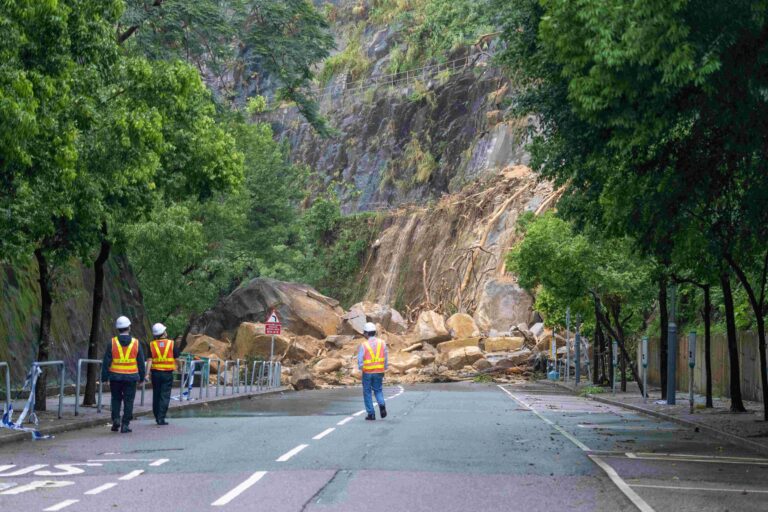
In some cases, these various types of natural hazards are interrelated. Therefore, they cannot always be observed or analyzed on their own, as the consequences of a specific hazard type might form the causes of another. A good example of this interconnectedness is landslides, a geological hazard type, that can be induced by heavy precipitation events of climatological origins.
Another aspect to note is the importance of anthropogenic global warming, which is an increasingly relevant factor in climatological hazards, creating severe physical climate risks across the world. Human activities are increasing the concentrations of greenhouse gases such as carbon dioxide (CO2), methane, and others, and the effects of a warming atmosphere can lead to more severe and/or more frequent occurrences of extreme events.
Examples of Natural Hazards
In many regions, climate change increases natural catastrophe risks, and recent examples of extreme events whose intensity or increased occurrence rate are a clear signal of the need for increased preparedness, climate adaptation, and risk mitigation.
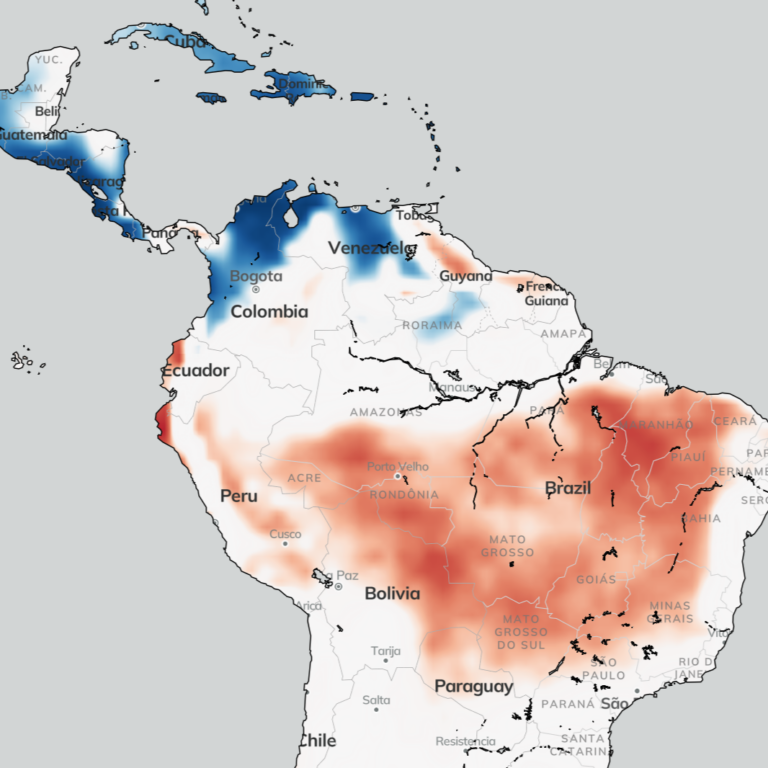
From a climatological perspective, a recent example of a natural phenomenon that can influence natural hazards is the relatively strong El Niño phase in 2023 and 2024. El Niño is a naturally occurring coupled ocean-atmosphere phenomenon that typically occurs every two to seven years and typically lasts 9 to 12 months. It can lead to extreme conditions in certain regions such as droughts, exceptionally high rainfall, and changes in wind patterns. In recent months, Brazil and other parts of South America have been subject to severe droughts and wildfires in the Amazon Rainforest, mainly due to reduced rainfall caused by El Niño. Simultaneously, El Niño tends to favor stronger hurricane activity in the Eastern Pacific with impacts on Central America, essentially accentuating climatological natural hazards. La Niña, on the other hand, is the other phase of the so-called El Niño – Southern Oscillation (ENSO) pattern and typically enhances hurricane activity in the Atlantic due to a reduction of vertical wind shear.
Another natural hazard example is the ongoing heavy precipitation and floodings occurring in India and other parts of South Asia, which started early in the Summer this year. Although these floodings and heavy precipitation events are in line with climatic patterns such as the monsoon months, climate change has amplified these climatological hazards. Indeed, according to Roxy Mathew Koll, a climate scientist at the Indian Institute of Tropical Meteorology, extreme rainfall events have tripled in India since 1950. The flooding events across India in 2024 are extreme, with devastating human consequences and disruptions in business operations in various sectors.
Finally, as an example of a geological hazard, Turkey and Syria were hit by two consecutive earthquakes of magnitudes 7.8 and 7.5, respectively, in early February of 2023. More than 50’000 people lost their lives, and the cost of direct physical damage was estimated to be over $34 billion. Many buildings collapsed or were heavily damaged, and millions of people were displaced. The geological hazard in this region was known, but no scientific methods are available to accurately predict a major earthquake. Nevertheless, scientists can use risk models to assess the probability that a significant earthquake will occur in a specific area within a certain period. Earthquakes, even though rarer than hydrometeorological events, often tragically demonstrate the sheer force of natural hazards and the severe consequences that may result.


Quantifying the Probability of Extreme Events
In risk assessments, return periods are often used to express an average recurrence interval between events such as floods, storms, or earthquakes. While return periods are usually expressed in years, they can be interpreted as an annual exceedance probability for an event. For example, a flood level with a 50-year return period has an annual probability of 0.02 or 2% of being exceeded in any given year. Return periods indicate the statistical measure of the average time interval between hazard events. Longer return periods typically suggest lower probabilities that hazards will occur in any single year. To illustrate this, countries in Central America have lower return periods for hurricanes of a given intensity compared to regions further north such as New York, due to their geographical location in the hurricane-prone Caribbean and North Atlantic basins.
Chronic vs Acute Physical Climate Risk
In the field of climate risk analytics, the classification of hazards is done based on how the hazard evolves through time. It is vital for businesses planning on becoming resilient to understand the difference between chronic and acute physical climate risks because each requires a different method of mitigation.
The acute physical risk is caused by an event-based hazard such as a hurricane landing, a flash flood, or an earthquake. Such risks happen quickly, are mostly extreme, and fall under the normal risk assessment and insurance coverage process. Chronic physical risks, on the other hand, result from changes in climate patterns that take place over a certain period. This includes sea-level rise, higher temperatures, or a period of drought. The chronic risk builds slowly but permanently impacts the viability of a particular area or business model.
An enterprise that is acutely at risk might be keen on planning an appropriate response strategy and getting covered by insurance. An enterprise at chronic risk would need to plan ahead to see whether the facility, the route, or the agricultural land would be viable after ten or twenty years. Many companies face both types of risks, which means a comprehensive analysis of climate risk is required.
Natural Hazard Regulation and Resilience
Across the world, several governments and international institutions have put in place regulations and frameworks to manage and mitigate exposure to natural hazards. Among those is the EU taxonomy, a classification system that enables companies and investors to identify environmentally sustainable economic activities, and provides guidance related to natural hazards.
Under its Do No Significant Harm (DNSH) principle, public and private actors should consider resilience to natural hazards in their economic and development activities. Projects must be designed in a climate-resilient way and must not exacerbate the impacts of natural hazards such as floods, landslides, or wildfires. Moreover, for activities to be considered sustainable under the EU Taxonomy, they need to include a thorough risk assessment of potential natural hazards. This involves identifying exposure and analyzing vulnerability to determine risk and incorporate resilience measures to cope with natural hazards and climate risks.
Natural Hazards Implications across Industries
As discussed in the previous section, natural hazards can have serious impacts on communities, infrastructure, and businesses. Industries of all sorts can be impacted by natural hazards and must closely monitor the weather and physical climate risks that they are exposed to. Common impacts of natural hazards include damage to infrastructure, destruction of resources, supply chain issues and bottlenecks, loss of clients, demand volatility, or employee unavailability.
For example, droughts and floods can impact the farming and agricultural sectors, impacting crops and livestock, livestock, or causing damage to machinery and infrastructure. In the case of El Niño, a drought in 2023 caused farmers in Peru’s Central Andes to abandon their dried-out land, because of water shortages which reduced pasture for flocks of alpacas to graze, and made it nearly impossible to cultivate crops.

In the chemical and pharmaceutical manufacturing industries, natural hazards such as floods or water shortages can cause damage to materials, products, and machinery, or affect access to water, energy supply, or transport capacity. These damages can in turn lead to heavy supply chain disruptions and financial losses.
As for the logistics and freight industry, climatological and hydrometeorological natural hazards can put significant pressure on global supply chains, important logistic hubs or shipping routes such as the Panama Canal, with impacts on lead times and operations. For example, a drought exacerbated by El Niño in Central America in 2023 led to disruptions in worldwide shipping, as the key global shipping route via the Panama Canal was disrupted because of low water levels.
Natural Hazards by the Numbers: What Global Data Shows
Aside from individual events, analysis of global disaster statistics also provides insight into what natural hazards generally entail and which types are most significant in the business context. According to data from the Center for Research on the Epidemiology of Disasters (CRED), which maintains the EM-DAT international disaster database, the year 2025 saw 358 natural hazard-related disasters, causing over 16,600 deaths, affecting over 110 million people, and resulting in economic losses of $169.68 billion.
If divided into the 4 types of natural hazards analyzed above, this distribution helps reveal which has the higher concentration of risk. The year 2025 saw the contribution of geophysical natural hazards to fatalities being significant; for instance, there were major earthquakes in Myanmar and Afghanistan, which made up a large part of deaths in the year. It matches the analysis of causes of natural hazards given above: geophysical hazards are acute and cause strong effects in a short period of time. On the contrary, climatological hazards have become responsible for some of the year’s most costly events. For example, there was a record-breaking drought in Syria that left 80% of the population without aid, and wildfires in the US, including the Palisades and Eaton fires.
This split illustrates a broader pattern in the types of natural disasters, with an explanation. While acute meteorological and geophysical disasters cause event-driven damage peaks, chronic climatological hazards are gradual yet can be equally costly. A risk model built primarily around sudden-onset events will systematically underweight the slower-building chronic climatological risks, such as examples from water stress and heat stress, that increasingly account for a significant share of global climate costs.
Climate Risk Analytics for Natural Hazards
The frequency of natural hazards is expected to increase along with global warming. Climate change is anticipated to lead to more frequent and severe extreme weather events, including heatwaves, heavy precipitation, and tropical cyclones. Warmer atmospheric temperatures, heightened by greenhouse gas emissions, will make hurricanes and other natural hazards more intense. The impacts of more frequent natural hazards will also lead to sea level rise, coastal flooding, biodiversity loss, human displacement and migration, and various other consequences.
Against the threats of more frequent and increasingly severe natural hazards, governments, institutions, and the private sector alike are developing innovative solutions in climate preparedness and resilience. The first step in developing effective and strong resilience strategies is the assessment and analysis of climate risks that are material for a certain region, ecosystem, or business activity. Climate risk analytics solutions empower companies and institutions to reduce their exposure to physical climate risks, develop trust among their stakeholders, ensure financial stability by avoiding climate damage costs, and comply with regulatory frameworks on climate risks and natural hazards.
How to Approach a Natural Hazard Assessment for Business Risk Management
To improve resilience against natural hazards, companies need to do a natural hazard risk assessment for businesses that goes through four main phases:
- Exposure mapping: This refers to pinpointing the physical assets or facilities that are in areas prone to certain hazards, whether it is a plant located in an area prone to flooding or a distribution center that is in a hurricane-prone coastal area.
- Hazard characterization: Determining the probability and impacts of the relevant hazards in each one of these areas in terms of return periods and historical data or predictions by climate models.
- Vulnerability and financial impact assessment: Turning hazard exposure into business impacts, such as costs resulting from business interruption, damage to physical assets, supply chain disruption, or any other effect on employees.
- Resilience planning and tracking: Taking mitigation actions, whether they are related to infrastructure or diversification of the supply chain.
- The importance of this last point is especially emphasized in the context of tools like the EU Taxonomy, which has seen its screening criteria and Do No Significant Harm rules change multiple times since the concept’s introduction, meaning that one-time assessments are usually insufficient for long-term compliance.
Natural Hazard Resilience with Correntics
Correntics provides state-of-the-art climate risk analytics, natural hazards exposure assessments, and scenario analyses to support companies in their climate resilience strategies. With scientifically robust data and efficient, high-quality risk quantification capabilities, the Correntics platform enables its users to analyze and mitigate business interruption risks, identify vulnerable hotspots across operations, and implement adequate and informed decision-making processes.
Further Reading
Related notes